A DAY IN THE LIFE
Our trained puppies live in one of two custom-designed indoor/outdoor puppy dormitories. The indoor section of each dormitory includes a puppy pen – a simple area with water where the puppies sleep – and a learning space where the puppies train. The outdoor sections are composed of two yards – one covered small gravel yard and patio where the puppies can sleep and use the bathroom overnight, and one larger grass yard that is opened during the day for the puppies to explore.
Trained puppies from each litter enter the dormitories when they turn 8 weeks old. This means that there is a slightly mixed age group, which is hugely beneficial for the youngest puppies. They have the opportunity to observe the older puppies in their daily activities, including in their training.
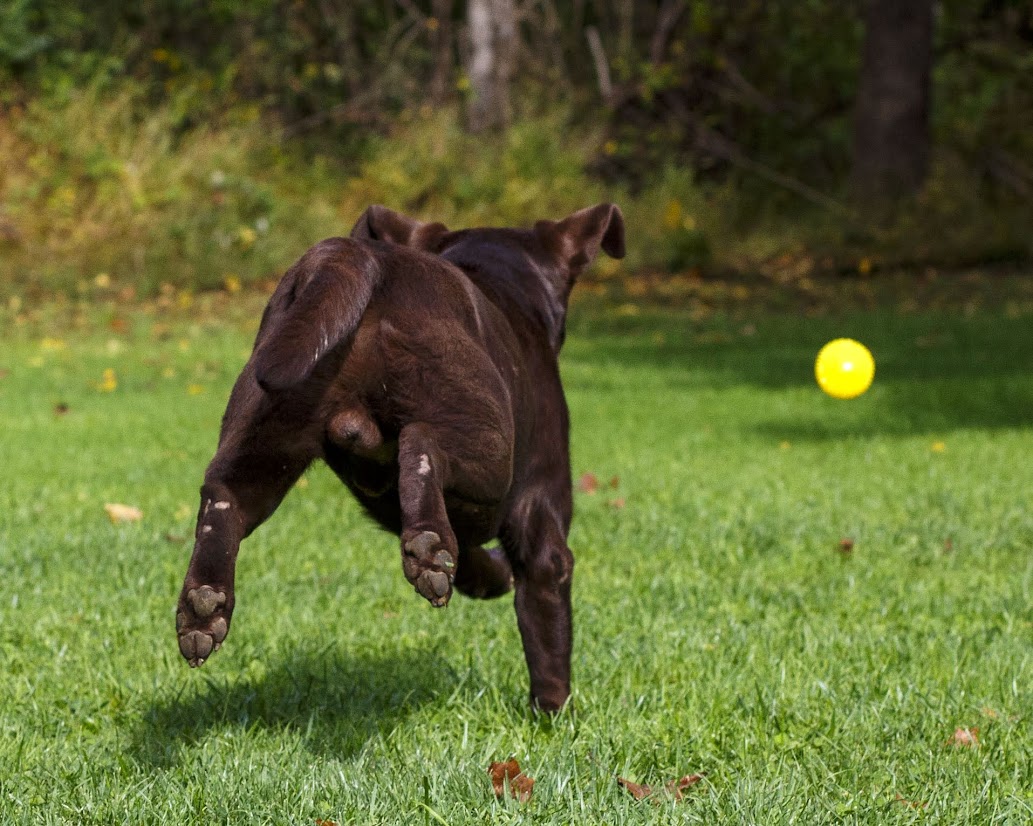
To start the morning, at 7:00AM the puppies are released into the larger grass yard for some playtime. It’s helpful for them to get a chance to “run their sillies out” before they begin learning. During breakfast time, each puppy is fed one by one. Puppies are picked up for feeding based on who is sitting politely and quietly, so younger puppies quickly learn from the older ones and offer a polite sit for breakfast! (On the occasion when a puppy is struggling, we help them with a gentle lure.)
Puppies are placed on the floor and again, we wait for a quiet and polite sit. When the puppy sits, we mark “yes” and place their food on the floor. The puppies eat separated from each other to ensure that every pup gets the correct portion. When puppies finish eating, they are placed in the large yard where they can use the bathroom (potty training!) and lounge. Trainers reinforce all outdoor potty behavior that they see; the puppies learn from the reinforcement both directly and from watching their more experienced peers. During this outdoor time, the interior of the dormitory is cleaned and sanitized.
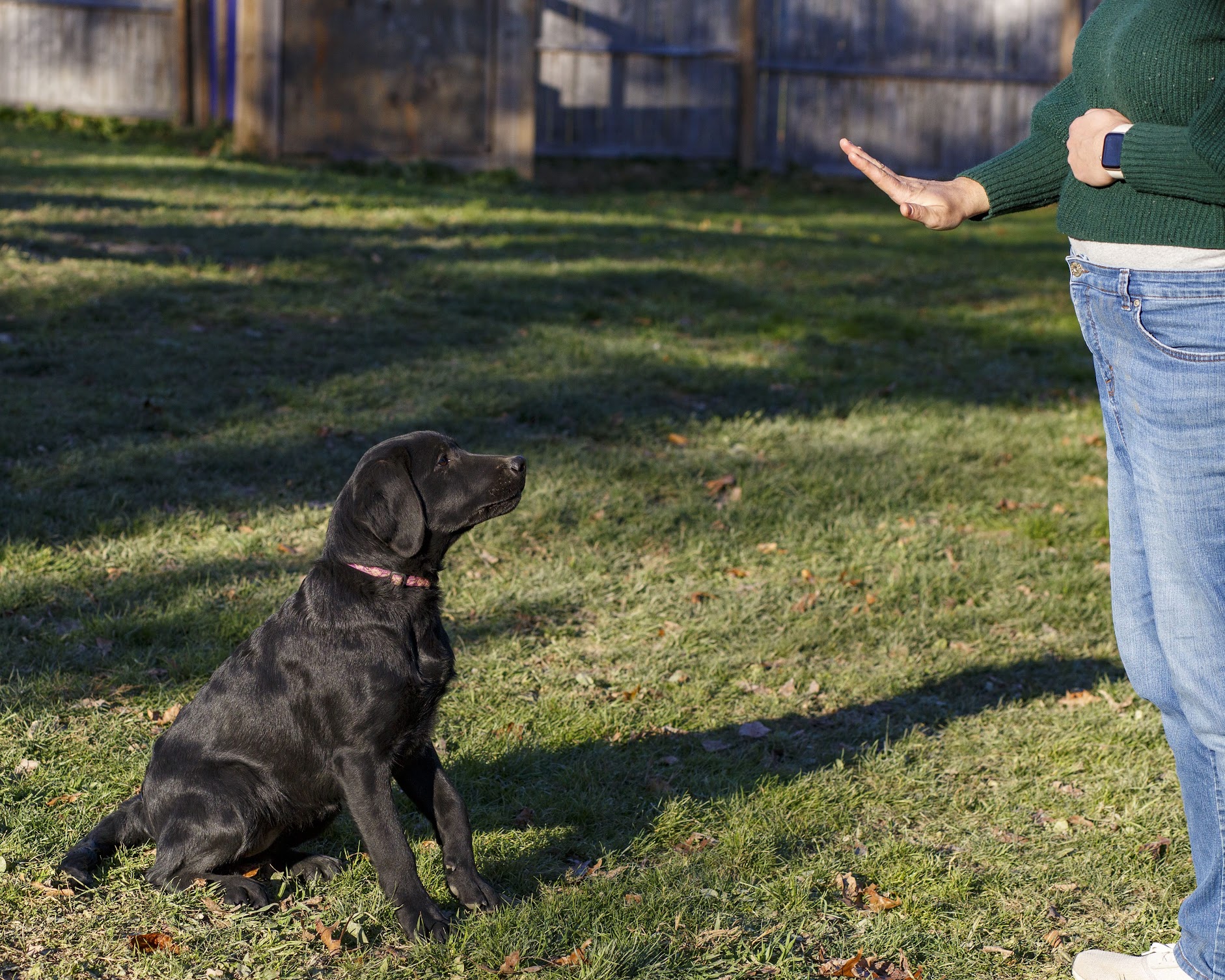
After everybody has eaten and had a chance to use the bathroom, it’s training time. The lead trainer and learning trainer work with every puppy 2-on-1 on their current training goals. This can take many forms, from indoor sessions practicing “sit” and “down” to leash walks on our grounds to sessions in our kitchen and other work spaces, where puppies can practice keeping all four feet on the floor. Each puppy’s goals are individually tracked and their progress is constantly monitored so their plan can be adjusted as they learn.
As puppies master the basic version of a skill, more difficulty is added to help the puppy strengthen the skill. For example, we begin teaching “sit” with a lure. When the puppy can sit with the lure, we move to asking for the sit verbally with no lure – this is a bit more difficult! When the puppy has mastered both a verbal and lured sit in their dormitory training area, we begin to ask for it in other places: the yard, the kitchen, the field, etc. Multiple trainers ask for it. The work of practicing with many adjustments is called “generalization” and it is the work that takes a skill from “the puppy knows how to perform the behavior” to “the puppy can reliably perform the behavior in many contexts.” This can be a very long process, so we spend quite a lot of time on it in our training programs!
After the first training session, each puppy is crated. We begin with the most senior puppies in the dormitory, so by the time the more junior puppies enter their crates, they are surrounded by calm and sleeping puppies. This helps them quickly learn that the crate is a place for quiet and relaxation. Every puppy’s crate time is individually managed to ensure that the puppy is expanding their skills without overwhelming them with challenge or pushing the limits of their bladder. During the crate time, the puppies’ outdoor yards are cleaned.
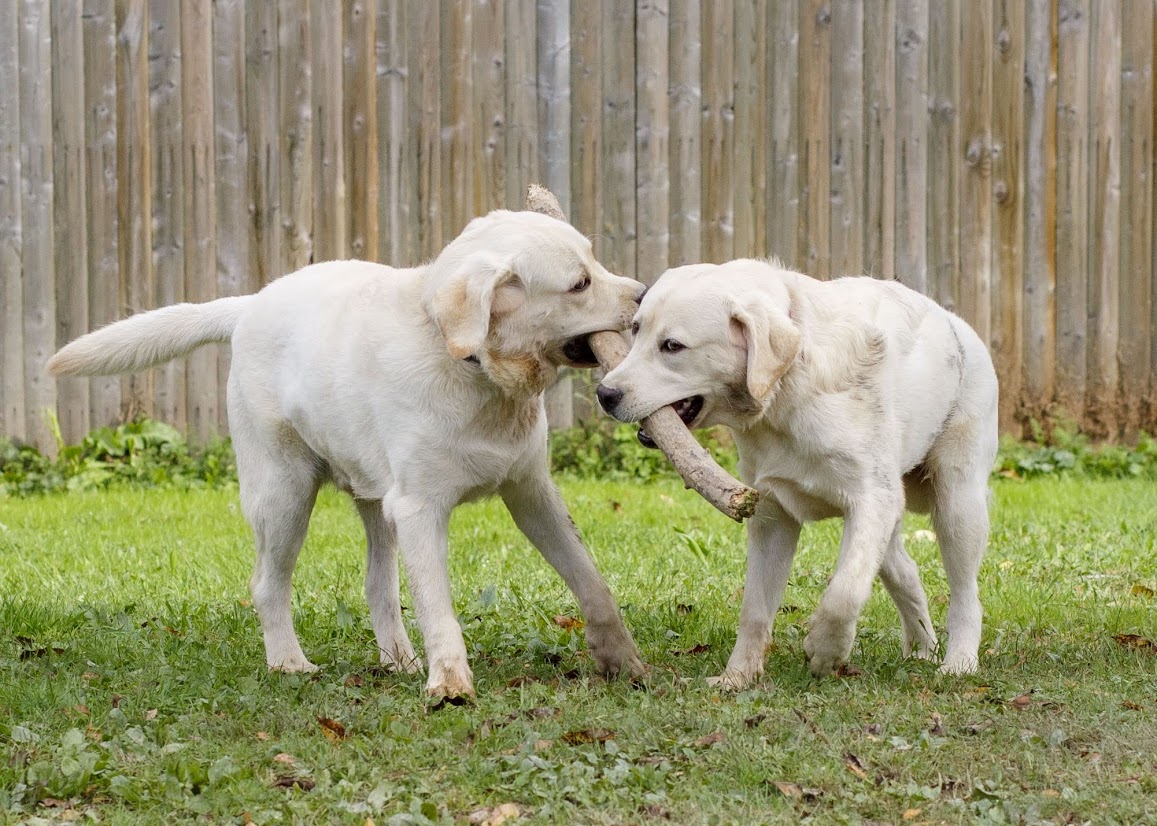
When the puppy’s crate time is over, they are released into their freshly cleaned yard and dormitory space. They have free time for several hours, during which they often have lots of fun playing – or as we like to call it, social learning. Social interaction during these early weeks can help the puppy learn important lessons, such as how to moderate their play intensity to suit an individual playmate. The puppies also practice down-regulating; as they get tired, they practice settling down and napping.
The afternoon looks similar to the morning, but with training and feeding reversed. We begin the afternoon with another training session, which runs in the same way as the morning session: two trainers working with each puppy one-by-one on the puppy’s goals, then a nap in the crate. During this second crating, staff cleans the yard again (it’s essential to clean frequently!).
After their crate practice, puppies are released to playtime until dinner, at about 5:00 PM. Dinner works the same way as breakfast – it is an opportunity for the puppies to practice sitting quietly when they’re excited. The pups eat one by one. In the afternoon, puppies are given a quick physical examination to ensure that their collars fit properly (they grow so quickly, a collar can suddenly begin to feel snug if not checked daily), to assess if the puppy’s body condition looks appropriate, and to help the puppy become used to a brief physical exam of the ears, eyes, teeth, and feet. At any time if a medical question arises, trainers notify our on-site vet tech who will assess the puppy and take whatever action is needed.
After two big training sessions, and with a full belly, the puppies are often tired after dinner – but not too tired to play! This is a classic puppy phenomenon that many professionals refer to as a “witching hour,” a period where the puppy is over-tired and loses the ability to self-regulate well. The puppies are let out into the yard after dinner so they can “get their sillies out” again. The interior of their dormitory is cleaned by a staff person, who can intervene if any puppy play becomes too rowdy. Within a short window, all of the sillies have been released and the puppies hit the hay on their patio or inside.
Any dogs that are working on overnight crating will be moved to their crates with a stuffed Kong at bedtime. All other puppies are closed into their smaller covered yards (where they can access their heated/air conditioned indoor space) or – in the case of extreme weather – closed inside. Puppies get a small bedtime snack and lights are out until tomorrow!
Overnight, the puppies have the opportunity to go back outside to use the bathroom unless they are crated (crated puppies are old enough to hold their bladder all night). After using the bathroom in their gravel pit, they return to sleep in what we affectionately refer to as the “puppy puddle” – a pile of puppies all cuddling together.
With the sunrise, we begin again!